The first time I saw Akira, I was thirteen and had no idea what was happening. My uncle had taped it off the Sci-Fi Channel onto a VHS that already had half an episode of The X-Files on it. The tape cut in about ten minutes late, right in the middle of a biker gang tearing through Neo-Tokyo. I didn’t know anyone’s name. I didn’t know what year it was set in. I didn’t know why that kid was screaming. And I watched the entire thing without blinking.
That was sometime around 1996. I’ve seen it maybe fifteen times since, and I’ll be honest: I’m still not sure I fully understand it. But I think that might be the point.
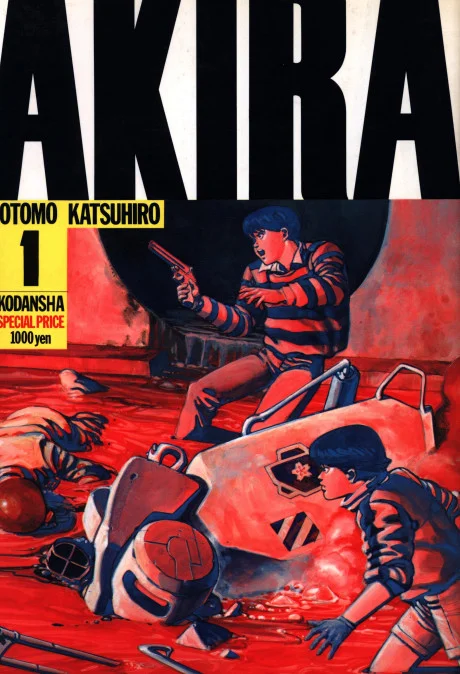
Akira premiered on July 16, 1988, directed by Katsuhiro Otomo and produced by Tokyo Movie Shinsha. It was adapted from Otomo’s own manga, which had been running in Young Magazine since 1982 and wouldn’t actually finish until 1990. That’s six volumes. Around 2,000 pages. And Otomo crammed it into 124 minutes. If you’ve ever felt like the movie was moving too fast, skipping over things, leaving threads hanging in midair, that’s why. You’re watching a compression artifact.

The setup, if you somehow haven’t seen it: it’s 2019, thirty-one years after a mysterious explosion destroyed Tokyo and kicked off World War III. Neo-Tokyo is a neon-soaked mess of political corruption and terrorist cells. Religious cults have sprung up around government experiments on psychic children. Shōtarō Kaneda leads a biker gang called the Capsules. His best friend Tetsuo Shima is the runt of the group, always a step behind, always angry about it. After a motorcycle accident puts Tetsuo in contact with an escaped test subject, he starts developing telekinetic powers that the military has been trying to weaponize for decades. The rest of the film is Tetsuo’s body and mind coming apart as those powers grow beyond anything anyone can control, and Kaneda trying to save his friend while the city collapses around them.
It sounds like a clean narrative when I lay it out like that. It isn’t. There are government conspiracies and resistance fighters and a Colonel with complicated motives and three shriveled psychic children who look ninety years old. There’s a cult worshipping someone named Akira who may or may not be dead. There’s a scene in a hospital that turns into body horror that would make Cronenberg uncomfortable. And through all of it, the film never slows down long enough to explain what you’re looking at. You either keep up or you don’t.
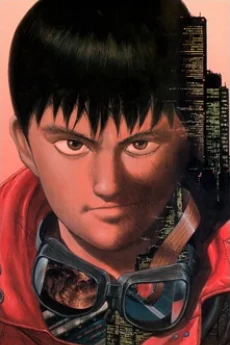

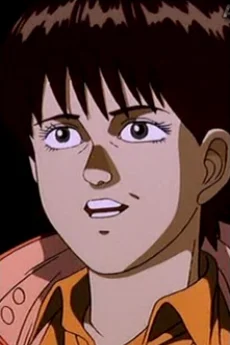
I’ve read the manga since that first VHS viewing, and the difference is staggering. The manga is an ensemble piece with dozens of characters, subplots about post-apocalyptic community building, and a slowly escalating Cold War metaphor that the film doesn’t have room for. Kaneda’s gang actually matters. The Akira cult makes sense. The ending earns its ambiguity because you’ve spent 2,000 pages watching Neo-Tokyo try and fail to contain something beyond human comprehension. The film takes roughly the first quarter and the last quarter of that story and welds them together with pure momentum.
And somehow, it works. Not as a coherent narrative, but as an experience.
Let’s talk about the animation, because that’s the reason this film survived its own plot problems. TMS put together a team of over 160,000 animation cels. Pre-digital, hand-painted, every single one. They recorded the voice performances before animating, which was basically unheard of in anime at the time, and then lip-synced the animation to match the dialogue. The result is that the characters move their mouths like actual humans, which sounds like a small thing until you realize how wrong anime mouths usually look. There’s a sequence early in the film where Kaneda rides his iconic red motorcycle through neon-lit streets, weaving through traffic. Every reflection on the bike’s surface is hand-drawn. The light trails behind the tail lights are hand-drawn. The buildings scrolling past in the background have individually rendered windows. In 1988, this was insane. In 2026, it’s still insane.
The motorcycle chase near the opening is the scene everyone remembers, and for good reason. The “Akira slide” — Kaneda skidding his bike sideways across the pavement — has been homaged, referenced, and straight-up copied in everything from Batman: The Animated Series to Adventure Time to PAW Patrol. I’m not kidding about PAW Patrol. Someone on Reddit put together a compilation of every Akira slide reference they could find, and it went viral. At some point, the reference became bigger than the source material. Kaneda’s bike might be more famous than Kaneda.
The Geinoh Yamashirogumi score deserves its own paragraph. This wasn’t a typical anime soundtrack with synth pads and J-pop. It was a 200-member collective performing gamelan percussion layered with Balinese chanting over electronic textures that sound like nothing else in the medium. When Tetsuo starts losing control, the music shifts from rhythmic to overwhelming, and the sound design layers in wet, organic squelching that makes your skin crawl. They weren’t trying to score an action movie. They were trying to make you feel like something was going wrong at a molecular level.
Now here’s where I land on Akira, and I know this will bother some people: I think the film is genuinely great and also genuinely incomplete. These aren’t contradictions. The community has been arguing about this for decades. Half the people who watch it call it a masterpiece. The other half call it a confusing mess with pretty pictures. They’re both right. The polarization is baked into the adaptation. When you take a 2,000-page story and cut 75% of it, you get something that feels like a fever dream — brilliant in fragments, bewildering in aggregate.

The characters suffer the most. Kaneda in the manga is a surprisingly complex kid who grows into a leader. Kaneda in the film is a likeable loudmouth who rides a cool bike and chases a girl. Tetsuo’s descent from insecure teenager to world-ending threat has genuine pathos in the manga because you spend time with him before everything goes wrong. In the film, he goes from zero to body horror in about forty minutes. You feel for him, but it’s because of the animation and the music, not because the script gave you reasons to care.
The Colonel is the most interesting character in both versions, and the film gives him enough room to breathe. His final scene is the closest the movie gets to the manga’s emotional weight. Everyone else is a sketch. The three psychic children — Takashi, Masaru, Kiyoko — look like shriveled old people trapped in kids’ bodies, and they’re genuinely creepy. But the film never explains why they look like that, or what their relationship to Akira actually means. The manga does. The film just lets them be unsettling and moves on.
There’s a moment near the end where Tetsuo’s powers spiral past anything his body can hold. His arm mutates, absorbs metal, absorbs flesh, absorbs everything around him into a growing mass of organic machinery that the film lets you watch in excruciating detail. I’ve seen horror films that flinch at less. Otomo didn’t flinch. He animated every vein, every rupture, every moment of Tetsuo realizing he can’t stop what’s happening to him. It’s the scene that made half the people in my generation fall in love with anime and the other half swear it off forever.
But here’s what I keep coming back to: the experience of watching Akira is unlike anything else. Even now. The combination of that animation quality, that score, that atmosphere of political decay and psychic horror and teenage recklessness — no other film sounds like this, looks like this, or feels like this. I’ve seen technically better anime films since 1988. I’ve seen more coherent ones. I haven’t seen one that replaced the feeling of watching Akira for the first time.
My uncle’s VHS copy eventually wore out. The tracking got worse every year until the neon lights of Neo-Tokyo were streaked with static lines. I bought the Pioneer DVD in college, then the Bandai Blu-ray, then the Funimation 4K. Same movie every time. Still haven’t blinked.
The film cost 1.1 billion yen to make, roughly $10 million in 1988 dollars. For context, that was several times the budget of a typical anime film at the time. It flopped domestically. Japanese audiences didn’t quite know what to make of it. But it found its audience in the West, and that audience built an entire subculture around it. Streamline Pictures brought it to American theaters in 1989 and then to home video. College campuses screened it alongside Rocky Horror. Anime clubs used it as a recruitment tool. A lot of people who are now in their forties first encountered Japanese animation through a third-generation VHS dub of Akira that somebody’s roommate had.
If you haven’t seen it, you should. Not because it’s perfect, but because animation as a medium looked one way before July 16, 1988, and a different way after. Whether you come out the other side thinking it’s a masterpiece or a beautiful mess, you’ll understand why everyone keeps talking about it.
And if you do watch it, read the manga afterward. You’ll finally figure out what was actually going on.